
Quick Answer
What industries benefit most from AI-driven SEO?
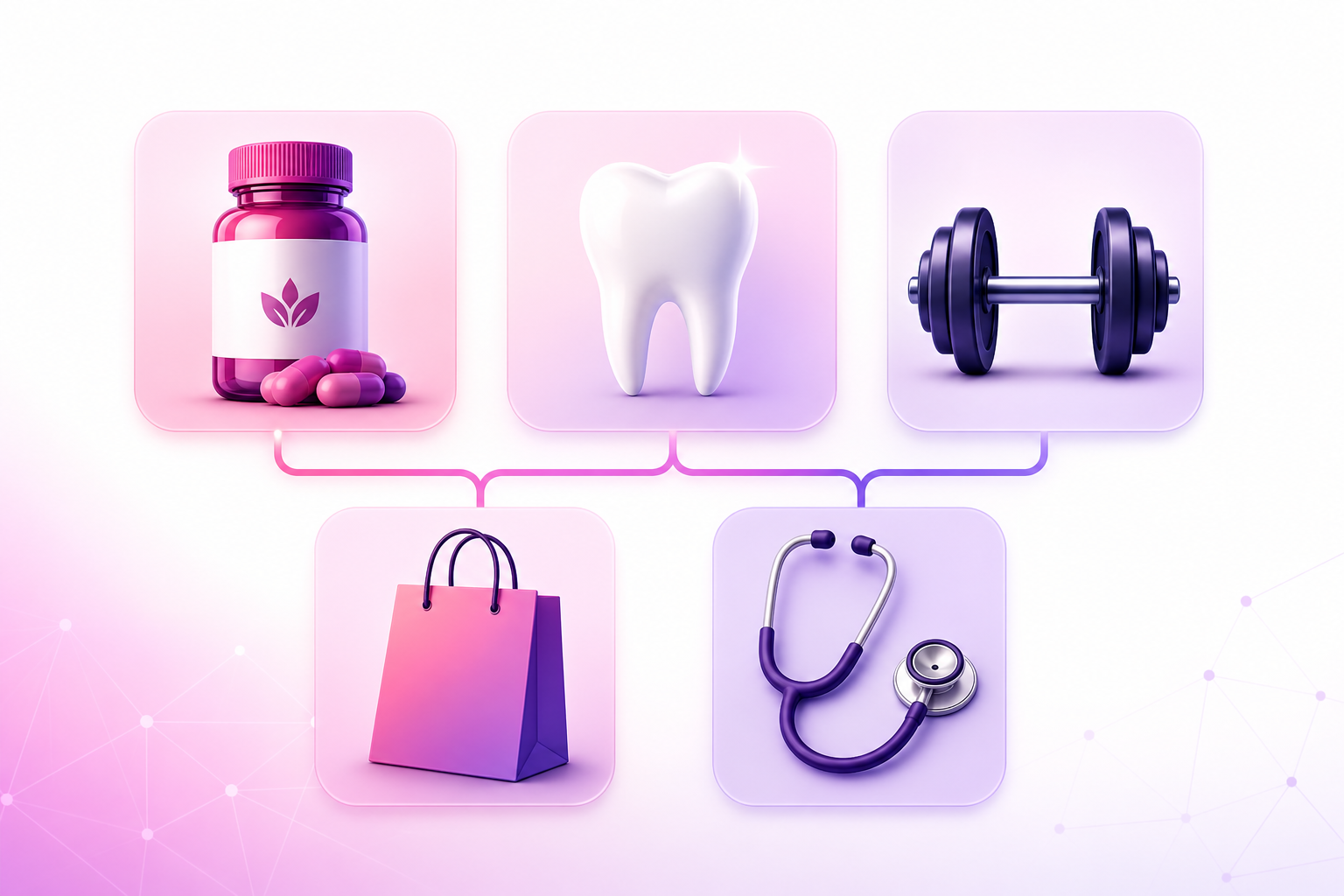
Supplement brands, peptide websites, DTC ecommerce brands, dental practices, doctors' offices, and wellness brands see the strongest ROI from AI-driven SEO. These industries share high search volume, complex buyer intent, and audiences that research deeply before purchasing — making organic search one of their most powerful acquisition channels.
If you've been paying attention to the digital marketing world lately, you'll know that AI-driven SEO is no longer a "nice to have" — it's fast becoming the difference between a business that dominates its niche online and one that quietly disappears off page one.
But here's a question we get asked a lot: does AI-driven SEO actually work for my type of business?
The short answer? Yes — but some industries are seeing truly extraordinary results. And if you're in one of them, you'd be leaving serious money on the table by ignoring this.
Let's break down exactly which industries benefit most from AI-driven SEO, why the technology is such a natural fit, and what it actually looks like in practice.
Key Takeaways
- 1
Supplement and wellness brands operate in a crowded, regulated space where AI-driven SEO provides a critical edge — helping them rank, convert, and appear in AI-generated search results.
- 2
Peptide websites attract research-literate audiences with complex intent — AI maps the full search journey and ensures your site shows up at every stage.
- 3
DTC ecommerce brands relying solely on paid social are one ad pause away from a traffic cliff. AI-driven SEO builds a compounding organic channel that works around the clock.
- 4
Dental practices and doctors' offices can see meaningful growth in new patient enquiries within 3–6 months through hyper-local AI SEO — with high LTV making the ROI exceptionally strong.
- 5
AEO is now inseparable from SEO. Brands with structured, authoritative content are increasingly being cited by ChatGPT, Perplexity, and Google's AI Overviews — a channel you can't buy your way into.
- 6
The common thread across all winning industries: high search volume, complex intent, trust-driven decisions, and customers worth winning for the long term.
First, a Quick Refresher: What Makes SEO "AI-Driven"?
Traditional SEO involved a lot of manual research — picking keywords, writing meta tags, building links, and hoping Google noticed. It worked, slowly, and with a lot of guesswork baked in.
AI-driven SEO flips that on its head. Instead of reacting to search trends, AI tools analyse enormous datasets in real time — search intent, competitor gaps, semantic relevance, entity relationships, and even how Google's algorithm is likely to shift — and use that intelligence to inform a strategy that's faster, sharper, and far more precise.
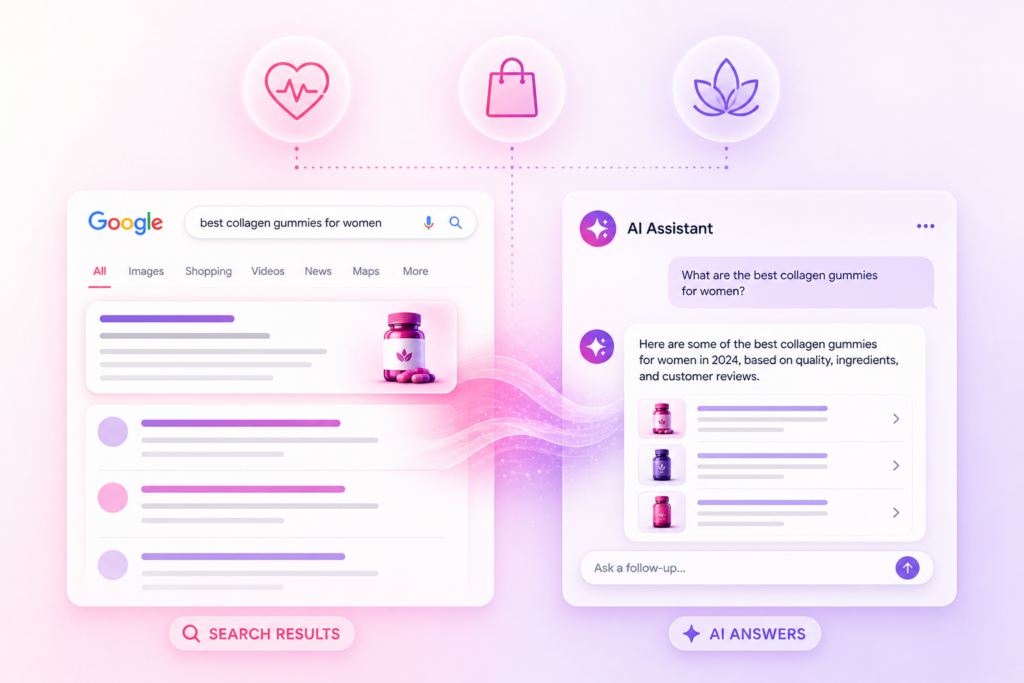
Add Answer Engine Optimisation (AEO) into the mix — optimising for AI search tools like ChatGPT, Perplexity, and Google's AI Overviews — and you've got a strategy built for how people are actually searching right now, not how they were searching five years ago.
Want a deeper dive into the distinction? Read our full breakdown of what AEO actually means and why it matters alongside traditional SEO.
The Industries Winning with AI-Driven SEO Right Now
1. Supplement Brands 💊
The global supplements market is enormous, crowded, and — let's be honest — deeply competitive. Whether you're selling collagen powders, greens blends, sleep support formulas, or sports nutrition, you're battling hundreds of brands for the same search terms.
This is exactly where AI-driven SEO earns its keep.
AI tools can identify micro-niche keyword clusters that your competitors haven't touched yet — think "best collagen supplement for women over 40 in South Africa" rather than just "collagen supplement." They can analyse what questions your ideal customer is asking at 11pm when they can't sleep and are falling down a health rabbit hole, and ensure your content answers those questions authoritatively.
Supplement brands also operate in a heavily regulated content space. AI helps navigate YMYL (Your Money or Your Life) content guidelines — the standards Google applies to health-related websites — by structuring content in ways that signal expertise, authority, and trustworthiness. That's not just good for rankings; it's table stakes for staying in the game.
Real-world example: A brand like Athletic Greens (now AG1) didn't become a $1.2 billion company purely on podcast ads. Their content infrastructure — long-form, expert-backed, semantically rich — is an SEO machine. Smaller supplement brands can replicate that approach with AI-driven content strategies, at a fraction of the cost.
2. Peptide Websites and Biohacking Brands 🧬
Peptide websites occupy a fascinating and genuinely tricky corner of the internet. The products themselves — BPC-157, TB-500, GLP research compounds, Melanotan — are searched by an intensely curious, research-literate audience. These aren't casual browsers. They're reading studies, comparing sources, and making purchasing decisions based on trust and information depth. I'd know - I'm one of them!
AI-driven SEO is almost uniquely well-suited to this space because:
- Search intent is complex. The same person might search "BPC-157 dosage protocol," "buy BPC-157 South Africa," and "BPC-157 side effects" within the same session. AI maps and connects these intent clusters so your site shows up at every stage of that journey.
- The content bar is high. Generic, thin content doesn't convert this audience. AI helps research and structure comprehensive, nuanced content that satisfies both the reader and Google's quality signals.
- The regulatory environment is sensitive. AI tools help brands walk the line between informative and compliant — crucial when your products sit in a grey regulatory area.
If you're running a peptide or research compound website and your SEO strategy is still "post a few product descriptions and hope for the best," we need to talk. Seriously — let's look at what a proper AI-driven strategy could do for you.
3. DTC (Direct-to-Consumer) Ecommerce Brands 🛍️
DTC brands are built on the premise of cutting out the middleman and owning the customer relationship directly. But here's the irony — too many DTC brands rely entirely on paid social to acquire customers, which means the moment they pause ad spend, growth stops.
AI-driven SEO fixes that by building a sustainable, compounding organic channel that works while you sleep.
For DTC brands specifically, AI delivers value across the entire funnel:
- Top of funnel: AI identifies content themes that attract your ideal customer early — before they even know they need your product.
- Middle of funnel: Semantic SEO structures your site so that someone researching a problem naturally lands on your solution.
- Bottom of funnel: AI-optimised product pages, comparison content, and review structures convert high-intent searchers into buyers.
DTC brands also typically have rich product catalogues, which means there's an enormous amount of programmatic SEO opportunity — AI can help you generate and optimise hundreds of product and category pages at scale without sacrificing quality.
Check out how we approach ecommerce SEO for DTC brands — and if your site design needs work alongside your SEO, our ecommerce web design service is built to convert.
4. Dental Practices 🦷
Local service businesses often underestimate the power of SEO — and dental practices are one of the most striking examples of a sector where AI-driven local SEO can produce fast, tangible results.
Think about how someone finds a new dentist. They Google "dentist near me," "teeth whitening [city]," or "emergency dentist open Saturday." They look at the map pack, skim a few reviews, and book whoever shows up first and looks trustworthy. That entire decision happens in under three minutes.
AI-driven SEO for dental practices works on several levels simultaneously:
- Google Business Profile optimisation informed by AI analysis of what local competitors are doing right (and wrong)
- Hyper-local keyword targeting that captures suburb-level and intent-specific searches
- Content creation around common patient questions — "how long does Invisalign take," "what's included in a dental implant cost" — that builds authority and drives appointment bookings
- Review strategy and schema markup that makes your practice stand out in search results
A well-executed AI-driven SEO strategy for a dental practice can meaningfully increase new patient enquiries within three to six months. For a practice where a single implant patient is worth R30,000+, the ROI maths are pretty compelling.
5. Doctors' Offices and Medical Practices 🩺
Similar to dental practices, but with higher stakes and more content complexity. Patients searching for GPs, specialists, aesthetic doctors, or functional medicine practitioners are making trust-driven decisions — and Google knows it.
Medical practices face the full weight of YMYL content guidelines, which means AI-driven SEO isn't just helpful — it's necessary. Getting the content structure wrong in this space can actively hurt your rankings.
AI helps medical practices:
- Build semantically structured service pages that Google reads as authoritative
- Create FAQ and condition-specific content that answers patient questions (and increasingly, shows up in AI-generated search overviews)
- Implement local SEO that captures "near me" and suburb-based searches
- Develop schema markup — particularly MedicalBusiness and FAQPage schema — that gives your content the best chance of being cited by AI search tools
This last point is huge. As more patients turn to tools like ChatGPT or Perplexity to answer health questions before consulting a doctor, practices with well-structured, authoritative content will be recommended. Those without it will be invisible.
6. Wellness Brands 🌿
Wellness is one of the most search-active categories on the internet. People are searching for solutions to anxiety, burnout, poor sleep, hormonal imbalance, gut health issues, skin conditions — the list goes on. And they're searching in nuanced, conversational ways that traditional keyword tools often miss.
AI-driven SEO is built for this kind of search behaviour. Natural language processing means AI tools understand that "I can't switch my brain off at night" and "insomnia remedies" are related intent clusters — and can help wellness brands create content ecosystems that capture both.
Wellness brands — whether you're selling CBD products, nootropics, mindfulness apps, or holistic health coaching — also benefit enormously from AEO. When someone asks ChatGPT "what's the best natural supplement for sleep," brands with structured, authoritative content have a real chance of being cited. That's a new kind of visibility that purely ad-reliant brands can't buy their way into.
What These Industries Have in Common
Looking across all of these sectors, a clear pattern emerges. AI-driven SEO delivers the greatest ROI for industries that share some combination of the following:
- High search volume with complex intent. When your customers are actively researching before they buy — comparing options, reading reviews, seeking expert guidance — SEO becomes a primary acquisition channel, and AI makes it dramatically more effective.
- Trust and authority matter. In health, wellness, and medical spaces especially, Google and AI search tools reward expertise and credibility. AI-driven SEO helps you signal both, consistently.
- Competitive markets. The more crowded your space, the more you need an edge. AI finds the gaps your competitors haven't found yet.
- High customer lifetime value. If a customer is worth R5,000, R50,000, or more over their lifetime, investing in organic acquisition through AI-driven SEO has an exceptionally strong payback period.
How AI-Driven SEO Actually Works in Practice
Here's what a proper AI-driven SEO engagement looks like when you work with an agency that actually knows what they're doing:
1. Deep audit and opportunity mapping. AI tools analyse your existing content, your competitors, and the full keyword landscape to identify exactly where the gaps and opportunities are.
2. Semantic content architecture. Rather than targeting isolated keywords, AI builds a connected content structure — pillar pages, cluster content, internal linking — that tells Google you're a genuine authority on your topic.
3. Content creation at scale, without sacrificing quality. AI assists with research, outlines, and drafts, but human expertise shapes everything into content that genuinely serves your audience. This is not about churning out low-quality AI fluff — Google has seen plenty of that and penalises it.
4. Technical SEO. Site speed, crawlability, schema markup, Core Web Vitals — AI tools surface technical issues faster and more comprehensively than manual audits.
5. Continuous optimisation. Unlike a set-and-forget approach, AI monitors performance data and identifies what's working, what's not, and where to push next.
Want to understand more about why this approach outperforms traditional SEO? We've written about 5 reasons your business needs AI-driven SEO — worth a read if you're still on the fence.

Is Your Industry on This List?
If you're running a supplement brand, a peptide website, a DTC ecommerce store, a dental practice, a doctor's office, or a wellness brand — you're sitting in one of the highest-opportunity spaces for AI-driven SEO right now. The question isn't whether it would work for you. The question is whether you're going to move before your competitors do.
We work with brands across exactly these sectors, and we'd love to show you what's possible. Take a look at our portfolioto see what results actually look like, or head straight to our SEO and AEO agency page to learn more about how we work.
Your competitors are already doing this. Let's make sure you're not playing catch-up.
Frequently Asked Questions
Q: What industries benefit most from AI-driven SEO?
Industries with high search volume, complex buyer intent, and trust-driven purchasing decisions benefit most from AI-driven SEO. This includes supplement brands, peptide and biohacking websites, DTC ecommerce brands, dental practices, doctors' offices, and wellness brands. What these sectors share is an audience that actively researches before buying — and that's exactly where a smart organic strategy wins.
Q: Does AI-driven SEO work for local businesses like dental practices?
Absolutely. AI-driven local SEO helps dental practices and medical offices dominate local search results, Google Maps, and AI-generated search overviews. By targeting hyper-local keywords, optimising your Google Business Profile, and building genuinely authoritative content around common patient questions, practices can see a meaningful increase in new enquiries within three to six months.
Q: Why is AI-driven SEO important for supplement and wellness brands?
Supplement and wellness brands operate in one of the most competitive and regulated content spaces online. Google applies strict YMYL (Your Money or Your Life) standards to health-related content, which means thin or generic content simply won't rank. AI-driven SEO helps these brands build content that meets Google's quality signals, converts high-intent searchers, and increasingly, gets cited by AI tools like ChatGPT and Perplexity when users ask health-related questions.
Q: How is AI-driven SEO different from traditional SEO?
Traditional SEO relies on manual keyword research, reactive trend-chasing, and a lot of educated guesswork. AI-driven SEO uses machine learning and natural language processing to analyse search intent, uncover competitor gaps, and map semantic relevance in real time. The result is a strategy that's faster to build, more precise in targeting, and compounds over time — rather than plateauing the way many traditional approaches do.
Q: How long does it take to see results from AI-driven SEO?
It depends on your industry, domain authority, and how competitive your target keywords are — but most clients start seeing meaningful movement within three to six months. Local SEO for practices like dentists and doctors tends to move faster. Content-heavy strategies for ecommerce and supplement brands typically build more gradually but deliver stronger long-term compounding returns.