
Quick Answer
What is LLM SEO and why does it matter in South Africa?
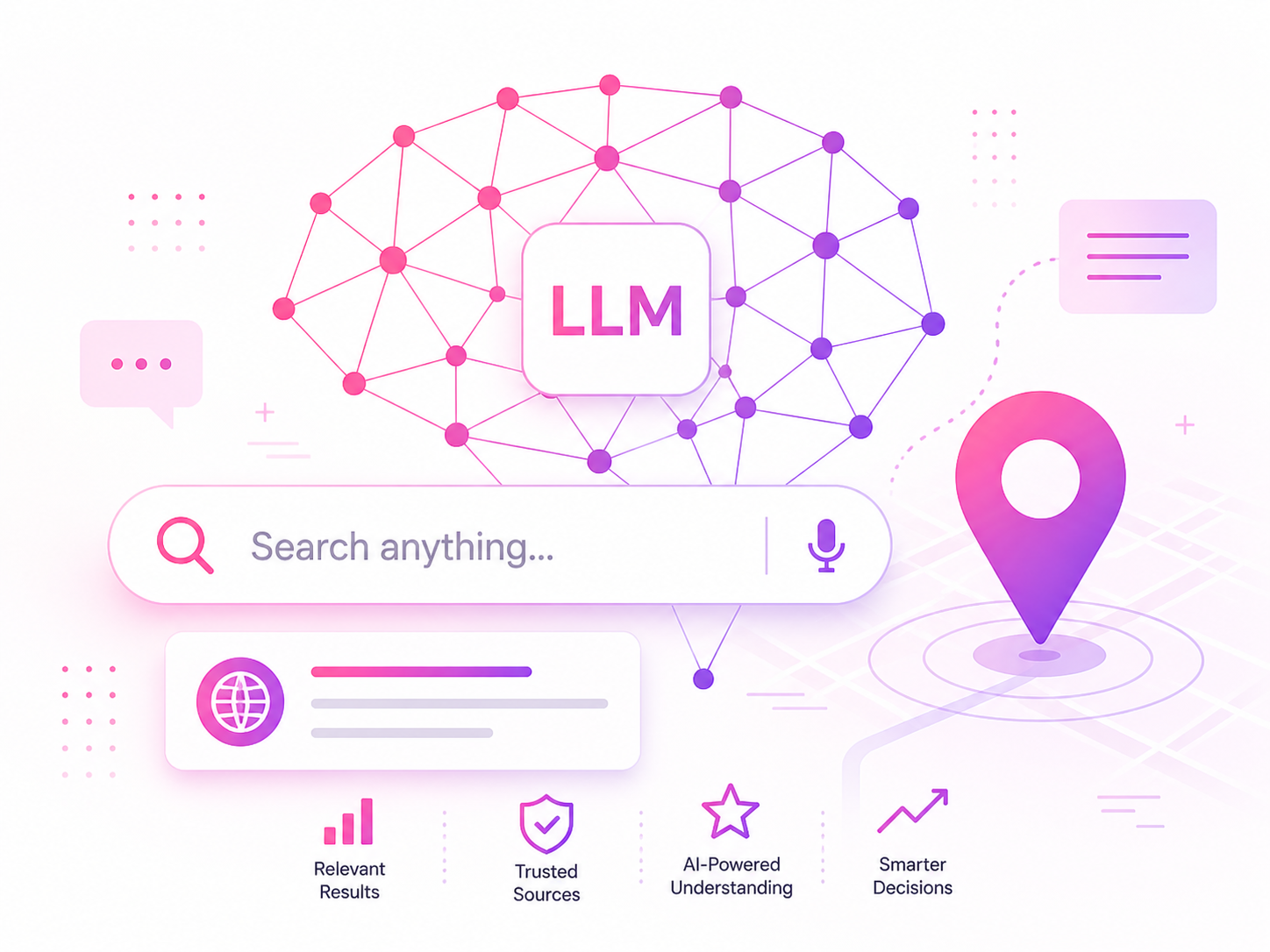
LLM SEO (Large Language Model SEO) is the practice of optimising your content so that AI-powered tools like ChatGPT, Perplexity, Google Gemini, and Claude recommend or cite your brand when users ask relevant questions. In South Africa, where AI search adoption is accelerating fast, businesses that invest in LLM optimisation now are building a visibility channel their competitors haven't even discovered yet.
Search has changed. Not "is changing" — has changed. And if your digital strategy is still built entirely around ranking on Google's blue links, you're already playing by yesterday's rules.
Here's what's actually happening: a growing number of people — your potential customers included — are no longer typing queries into a search engine and scrolling through results. They're asking AI tools a question and trusting the answer they get back. ChatGPT. Perplexity. Google's AI Overviews. Microsoft Copilot. These tools are now the first stop for millions of searches every day, and they're citing specific brands, websites, and sources in their responses.
The businesses getting cited? They're getting traffic, trust, and sales from a channel most of their competitors haven't even thought about yet.
The businesses being ignored? They're watching their organic click-through rates quietly decline and wondering why.
This is what LLM SEO is about. And if you're a brand operating in South Africa — whether you're selling supplements, running a dental practice, building a DTC store, or growing a wellness business — understanding LLM optimisation right now is one of the most valuable things you can do for your long-term visibility.
Let's get into it.
Key Takeaways
- 1
LLM SEO is already here. AI tools like ChatGPT, Perplexity, and Google's AI Overviews are actively citing brands in their responses. South African businesses that optimise for this now are building an early-mover advantage.
- 2
Authority is the core currency. LLMs cite brands that demonstrate genuine expertise consistently and accurately across the web — not brands that game keywords.
- 3
Structure and schema matter enormously. FAQ, Article, and LocalBusiness schema give AI crawlers a clear, machine-readable map of your content — and dramatically improve your chances of being cited.
- 4
LLM SEO and traditional SEO are complementary, not competing. The strongest strategies in 2026 combine Google ranking, AEO, and LLM optimisation into one coherent content and authority-building approach.
- 5
The South African opportunity is wide open. Most local businesses have no LLM optimisation strategy. For brands willing to move now — in health, wellness, ecommerce, dental, and beyond — the window to establish AI search authority is genuinely wide open.
- 6
This is not a quick fix — it's a compounding asset. LLM optimisation builds over time. Brands that start now will be extraordinarily difficult to displace once they establish authority in AI-generated search.
What Is LLM SEO?
LLM stands for Large Language Model — the technology that powers AI tools like ChatGPT, Google Gemini, Perplexity, and Anthropic's Claude. These models are trained on vast amounts of internet content, and they use that training to generate responses to user queries in natural, conversational language.
LLM SEO — sometimes called LLM optimisation or GEO (Generative Engine Optimisation) — is the practice of structuring and creating your content in a way that makes it more likely to be understood, trusted, and cited by these AI systems when they answer relevant questions.
It sits alongside traditional SEO and AEO (Answer Engine Optimisation) as part of a modern, comprehensive search visibility strategy. Think of it this way:
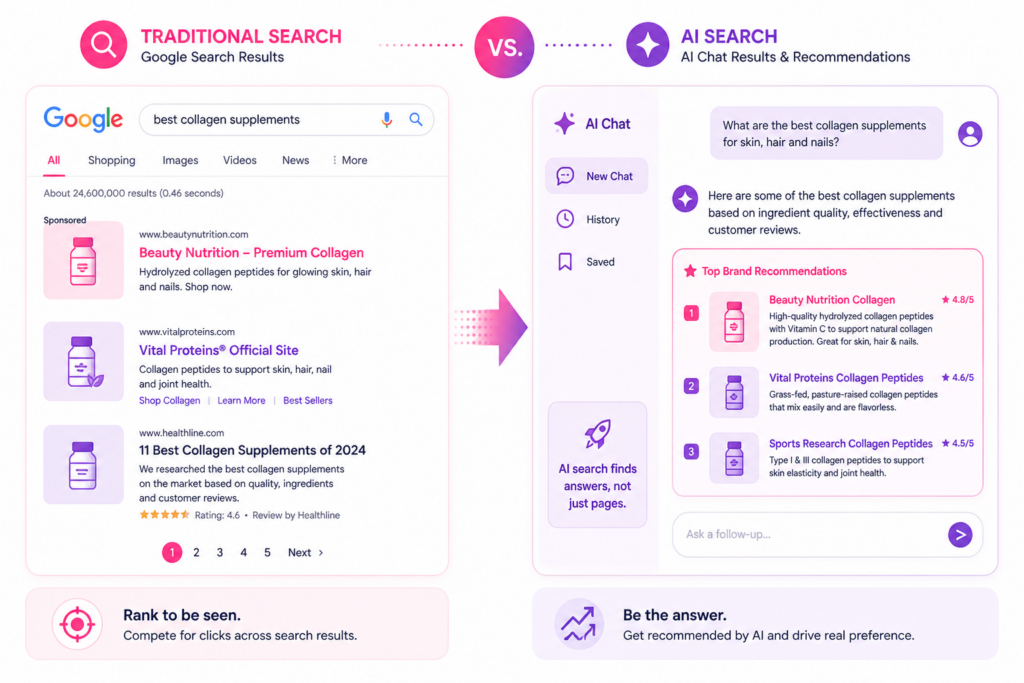
- Traditional SEO gets you ranking on Google's search results pages
- AEO gets you into featured snippets and voice search answers
- LLM SEO gets you cited and recommended inside AI-generated responses
All three matter. But LLM optimisation is the newest frontier, the least understood, and — right now — the one with the most untapped opportunity, particularly in the South African market where most businesses are still catching up.
Want to understand how AEO fits into this picture? Read our full guide on what AEO actually means and why it matters.
Why LLM SEO Matters More Than Most South African Businesses Realise
South Africa has one of the most rapidly growing digital economies on the African continent. Smartphone penetration is high, internet access is expanding, and South African consumers are increasingly sophisticated in how they research purchases online.
And increasingly, that research is happening through AI tools.
A South African shopper researching the best collagen supplement isn't just Googling anymore — they're asking ChatGPT. A patient in Johannesburg looking for a specialist isn't only checking Google Maps — they're asking Perplexity. A business owner in Cape Town comparing marketing agencies isn't scrolling through results pages alone — they're getting AI-generated summaries that reference specific companies by name.
The brands showing up in those AI-generated answers are building a compounding trust advantage that's extraordinarily hard to dislodge once established. The brands absent from those answers are losing consideration at the very first stage of the buying journey — often without even knowing it.
Here's the kicker: most South African businesses have no LLM optimisation strategy whatsoever. Which means that for brands willing to move now, the opportunity to establish authority and visibility in AI-generated search is genuinely wide open.
This is precisely why we've built LLM optimisation into our core SEO and AEO offering — because the window to get ahead of this curve won't stay open forever.
How LLM Optimisation Actually Works
This is where things get practical. LLM optimisation isn't magic, and it isn't entirely different from good SEO — but it does require a specific understanding of how large language models evaluate and select content.
1. Authority and Trustworthiness Are Everything
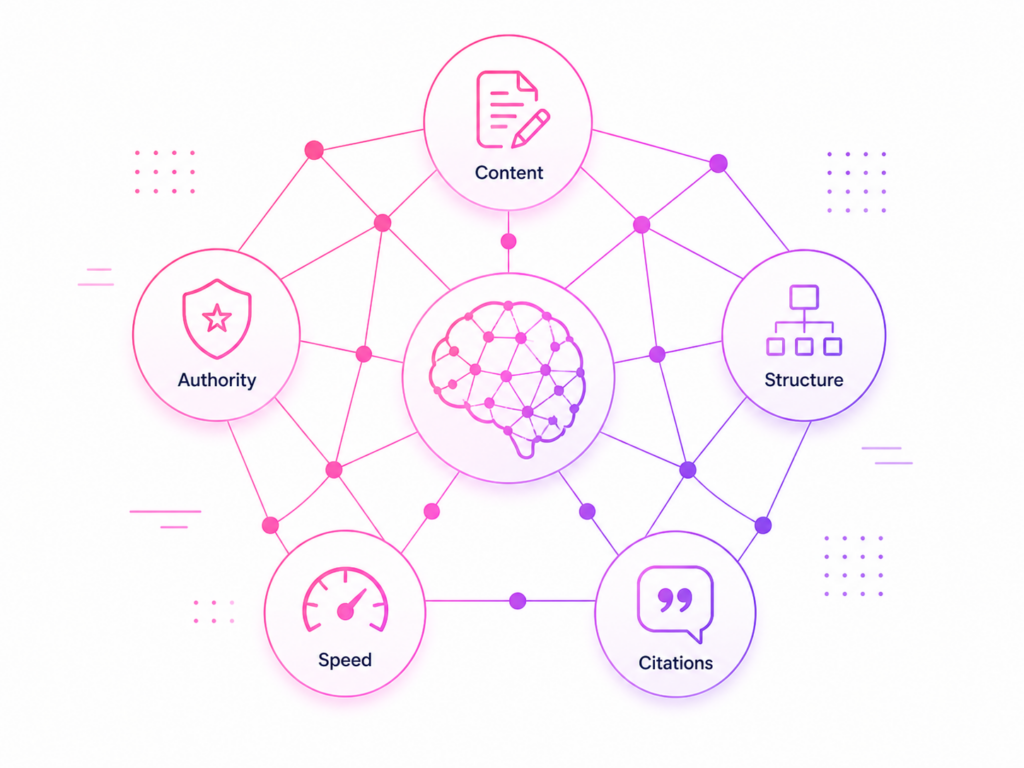
LLMs are trained to favour content from sources that demonstrate genuine expertise. This maps closely to Google's E-E-A-T framework (Experience, Expertise, Authoritativeness, Trustworthiness) but goes further — AI models synthesise across multiple sources and are more likely to cite brands that appear consistently, credibly, and accurately across the web.
What this means practically: your content needs to be genuinely good. Comprehensive, accurate, well-structured, and written with real expertise. Thin content, keyword stuffing, and AI-generated fluff that says nothing original will not get you cited. It will get you ignored.
2. Structured, Semantically Rich Content
LLMs process language semantically — they understand concepts, relationships, and context, not just keyword matches. LLM optimisation therefore requires content that is built around semantic topic clusters, not isolated keywords.
Your content needs to demonstrate that your brand genuinely understands its subject matter at depth. A supplement brand that has comprehensive, accurate content covering ingredients, mechanisms, dosage considerations, and comparison information is far more likely to be cited by an AI tool than one that has five thin product descriptions and a homepage.
This is why ecommerce SEO for supplement and DTC brands needs to be built around topic authority, not just product optimisation.
3. Clear, Direct Answers to Specific Questions
AI tools are fundamentally question-answering machines. They're constantly asking themselves: "does this content clearly and directly answer the query I'm responding to?"
LLM-optimised content is structured to answer specific questions explicitly. FAQ sections, definition paragraphs, clear H2 and H3 structure, and concise summary statements all help AI models extract and cite your content accurately.
This is one of the reasons schema markup — particularly FAQPage, HowTo, and Article schema — is so important for LLM optimisation. It gives AI crawlers a structured, machine-readable map of your content's meaning.
4. Consistency Across the Web
LLMs don't just look at your website in isolation. They synthesise information from across the internet — which means your brand's presence on third-party sites, review platforms, industry publications, and social media all contribute to how AI models perceive and represent you.
Brands with strong backlink profiles from authoritative, relevant sources are more likely to be cited. Brands mentioned consistently and positively in reviews, forums, and industry content build the kind of distributed authority that LLMs reward.
This is why a truly effective LLM optimisation strategy includes off-page work alongside on-page content — not just link building for rankings, but citation building for AI visibility.
5. Speed, Technical Health, and Crawlability
LLMs are fed by web crawlers — and content that's slow to load, poorly structured technically, or hard to crawl simply doesn't make it into the training and retrieval pipeline as effectively as clean, fast, well-structured sites.
Technical SEO and LLM optimisation are more closely linked than most people realise. If you haven't had a technical audit recently, that's where we'd start. See how we approach this as part of our full SEO offering.
LLM SEO for Specific Industries in South Africa
Supplement and Wellness Brands
If someone asks ChatGPT "what's the best collagen supplement for women in South Africa," you want your brand in that answer. Getting there requires a content strategy that covers the full topic landscape — ingredient science, product comparisons, dosage guidance, safety considerations — with enough depth and accuracy that AI tools treat you as a credible source.
The brands that invest in this content infrastructure now will dominate AI-generated recommendations in their category for years.
Dental Practices and Medical Professionals
Patients are increasingly using AI tools to research practitioners, procedures, and costs before booking. A dental practice with comprehensive, well-structured content covering treatments, pricing, recovery, and FAQs is far more likely to be cited in an AI response than one with a basic brochure website.
For medical and dental practices, LLM optimisation is also a trust signal to prospective patients — if an AI tool recommends you, that carries significant weight.
DTC Ecommerce Brands
Product discovery through AI tools is a growing trend. Consumers are asking AI assistants for product recommendations, comparisons, and reviews — and the brands with structured, authoritative content ecosystems are winning those recommendations.
If you want to understand what a properly optimised ecommerce presence looks like — from site architecture through to content strategy — take a look at our ecommerce web design and ecommerce SEO services.
Peptide Websites and Biohacking Brands
The research-literate audience that peptide brands serve is among the most active users of AI search tools. These are people asking Perplexity detailed questions about BPC-157 half-life, comparing sourcing options, and asking ChatGPT for protocol recommendations. Comprehensive, accurate, well-structured content is the only way to earn citations in this space — and the brands that establish authority early will be very difficult to displace.
Curious whether LLM optimisation is right for your business? Check out which industries are seeing the most growth with AI-driven SEO in 2026.
What LLM Optimisation Is NOT
It's worth clearing up a few misconceptions that circulate in the SEO space:
It's not about stuffing your content with AI-related keywords. Writing "as an AI language model" repeatedly, or targeting "ChatGPT" as a keyword, does nothing for LLM visibility. What matters is the quality, structure, and authority of your content.
It's not a replacement for traditional SEO. Google's traditional search results still drive enormous volumes of traffic. LLM SEO is an additional layer — not an alternative. The businesses winning in 2026 are doing both, and doing both well. Read more on why AI-driven SEO needs to be part of your strategy.
It's not a quick fix. LLM optimisation is authority-building work. It compounds over time. The brands starting now will have a significant head start on those who wait until it becomes common knowledge — which, in the South African market, may still be 12 to 24 months away.
Where to Start with LLM SEO in South Africa
If you're reading this and thinking "we need to get moving on this," here's a practical starting framework:
- Audit your existing content for depth and accuracy. Thin, generic content won't get you cited. Identify your most important topic areas and build genuinely comprehensive resources around them.
- Implement proper schema markup. FAQ, Article, LocalBusiness, and MedicalBusiness schema give AI crawlers structured signals about your content's meaning and credibility.
- Build your off-page authority intentionally. Seek citations, mentions, and backlinks from authoritative sources in your industry. This distributed presence is what LLMs use to establish brand credibility.
- Structure your content to answer questions directly. Every major piece of content should have a clear, concise answer to the core question it addresses — placed early, written plainly.
- Treat technical SEO as non-negotiable. Fast, crawlable, well-structured sites are the foundation everything else sits on.
And if you want a team that understands all of this and has already built it into their process — you know where to find us.
Frequently Asked Questions
Q: What is LLM SEO?
LLM SEO — also called LLM optimisation or Generative Engine Optimisation (GEO) — is the practice of optimising your website and content so that large language model-powered AI tools like ChatGPT, Perplexity, Google Gemini, and Microsoft Copilot are more likely to cite, recommend, or reference your brand when answering user queries. It sits alongside traditional SEO and AEO as part of a complete modern search visibility strategy.
Q: How is LLM SEO different from traditional SEO?
Traditional SEO focuses on ranking in Google's search results pages through keyword optimisation, backlinks, and technical health. LLM SEO focuses on being cited inside AI-generated answers — a fundamentally different kind of visibility. The two are complementary rather than competing, and the strongest strategies in 2026 address both simultaneously.
Q: Is LLM optimisation relevant for South African businesses?
Absolutely — and the opportunity in South Africa is particularly strong right now because most local businesses haven't started yet. South African consumers are increasingly using AI tools like ChatGPT and Perplexity to research purchases, find practitioners, and compare brands. Businesses that establish LLM authority now will have a significant head start on competitors who move later.
Q: What types of content perform best for LLM optimisation?
Comprehensive, accurate, well-structured content that directly answers specific questions performs best. This includes long-form pillar pages, detailed FAQ sections, comparison content, and expert-authored guides. Schema markup — particularly FAQPage, Article, and LocalBusiness schema — also significantly improves how AI crawlers interpret and cite your content.
Q: How long does LLM optimisation take to show results?
LLM optimisation is authority-building work, so it compounds over time rather than delivering overnight results. Most brands begin to see meaningful shifts in AI citation and referral traffic within three to six months of implementing a structured strategy — with results continuing to build well beyond that as domain authority grows.
Q: Do I need a separate LLM SEO strategy or does it integrate with my existing SEO?
It integrates — and should. The best approach is a unified strategy that combines traditional SEO, AEO, and LLM optimisation into a single coherent content and authority-building programme. That's exactly how we structure our work at Pitch Perfect Marketing.